
Happysimus › Blog ›
Health & Wellness · Women’s Health · OB-GYN
Women’s Health · OB-GYN Perspective · Longevity
A Physician and OB-GYN Specialist’s Honest Account of the Research Gap That Has Cost Women Their Health — And What Is Finally Changing
By The Marcopera | Physician · OB-GYN Specialist · Certified Life Coach · Founder, Happysimus
July 9, 2026 · Women’s Health · 14 min read

Medicine has spent decades studying the male body as the default human body. Women have paid the price. Photo: Unsplash
Here is a fact that should disturb every woman reading this — and every physician who treats them. For decades, the standard dosage of zolpidem — one of the most commonly prescribed sleep medications in the world — was based on studies conducted primarily on men. Women metabolise the drug at a significantly slower rate. The result: women taking the “standard” dose were waking up the following morning still impaired — getting into cars, driving to work, and functioning in ways that constituted a genuine safety risk. The FDA only issued sex-specific dosing guidance in 2013. Not 1973. 2013. That is not an isolated historical anecdote. It is a window into a systemic pattern that has shaped — and in many cases compromised — women’s healthcare for generations. A 2025 Stanford University analysis published in the Journal of General Internal Medicine reviewed the sex distribution of clinical trial participants across all Phase 3 interventional trials registered between 2000 and 2024. The findings were sobering: despite decades of policy mandates requiring the inclusion of women, significant sex-based gaps in clinical research participation persist across cardiovascular disease, neurology, and other conditions that affect women disproportionately — or differently. The Global Wellness Summit’s 2026 Future of Wellness Report has named the women’s health research gap as one of its defining trends of the year — specifically highlighting the emerging understanding that the ovary functions as “command central” for women’s health, and that its decline dramatically accelerates systemic ageing in women in ways that medicine has only recently begun to study with appropriate rigour. As an OB-GYN specialist, I want to use this post to be direct about what this means — what has gone wrong, why it matters to your health right now, and what is finally beginning to change. 📊 THE RESEARCH GAP — WHAT THE NUMBERS REVEAL
Sources: JACC Advances · JAMA Network Open 2025 · KFF Health News 2026 · Stanford/JGIM 2025 How Medicine Built a Male Default — And Why Women Paid the PriceThe story begins with thalidomide. In the late 1950s and early 1960s, the drug was prescribed to pregnant women for morning sickness and caused devastating limb deformities in thousands of newborns. The regulatory response — well-intentioned — was to sharply restrict the participation of women of childbearing age in clinical trials to protect potential foetuses from harm. As the Stanford analysis documents, this led to a substantial and lasting decline in female participation in clinical research that would take decades to reverse. The 1993 NIH Revitalization Act required the inclusion of women in NIH-funded research — a landmark moment. But as a 2025 NCBI commentary highlights, implementation has been uneven, contested, and in some cases actively undermined by political pressures on the research infrastructure that supports sex-specific science. The consequence of decades of male-default research is not merely academic. It has produced clinical guidelines, drug dosages, diagnostic criteria, and symptom checklists that were calibrated on male bodies — and then applied to female patients who were physiologically different in ways that the studies had never captured. A comprehensive 2025 review published in Naunyn-Schmiedeberg’s Archives of Pharmacology documents the breadth of this problem across multiple medical specialties: sex differences have been identified in the prevalence, symptoms, diagnosis, and treatment of cardiovascular disease, depression, neurological conditions, autoimmune disease, pharmacological metabolism, and pain management. In pain management specifically, the review notes, women’s symptoms are more likely to be dismissed or not taken seriously by treating physicians — a finding that will be familiar, painfully, to many women reading this. The Heart Attack That Does Not Look Like a Heart Attack — If You Are a WomanNowhere has the male-default research model caused more demonstrable, measurable harm than in cardiovascular medicine. The classic presentation of a myocardial infarction — crushing central chest pain radiating to the left arm — was established in studies conducted predominantly on middle-aged men. Women, however, more frequently present with atypical symptoms: jaw pain, nausea, fatigue, shortness of breath, and back pain, which are symptoms that do not match the textbook picture developed from male study populations. The clinical consequences have been severe. As Valiance Clinical Research’s 2026 analysis summarises, women’s cardiac symptoms were historically more likely to be misattributed to anxiety, stress, or gastrointestinal problems — delaying diagnosis and treatment in ways that directly increased mortality. Women are more likely than men to die within one year of a first heart attack. This is not primarily a biological inevitability. It is at least partly a consequence of diagnostic criteria that were not built with women’s presentations in mind. A 2025 systematic review published in JAMA Network Open, examining 1,079 cardiovascular clinical trials registered from 2017 to 2023, found that women remain significantly underrepresented specifically in trials on arrhythmia, coronary heart disease, acute coronary syndrome, and heart failure — precisely the conditions where the sex differences in presentation and treatment response are most clinically significant. The authors call for targeted regulatory policies mandating diversity. They are right to do so. But the gap they are describing is not historical. It is current. It is ongoing. And women’s lives are the cost. 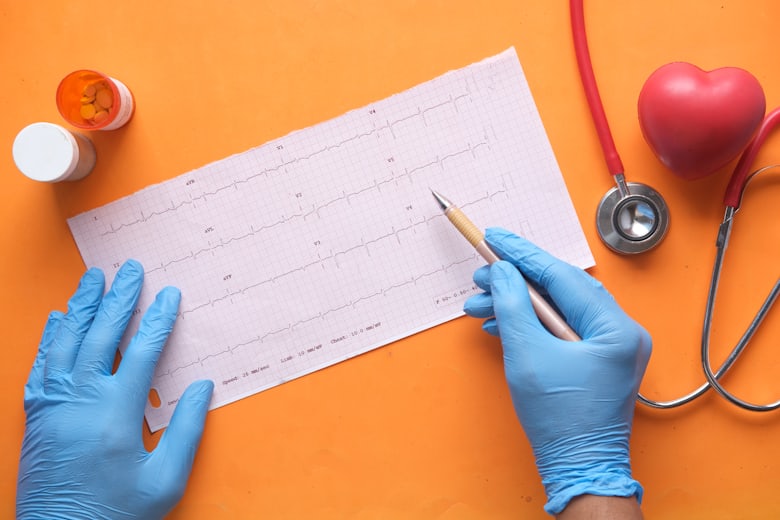 The classic heart attack presentation was built on male data. Women presenting with jaw pain, nausea, and fatigue were too often sent home. Photo: Unsplash The Ovary — Command Central for Women’s Health That Medicine Largely IgnoredAs an OB-GYN, I want to speak to what I consider the most important emerging insight in women’s health science — and the one most consequential for how every woman approaching her 40s and beyond thinks about her health. The ovary is not merely a reproductive organ. It is a systemic health regulator whose influence extends to cardiovascular function, bone density, cognitive health, metabolic balance, immune competence, and skin integrity. When ovarian function declines — through perimenopause and menopause — the effects are not limited to hot flushes and missed periods. They cascade across virtually every organ system in the body. The Global Wellness Summit 2026 report explicitly frames this as the defining paradigm shift in women’s longevity science: research is mounting that women age fundamentally differently from men, with ovarian ageing functioning as the accelerant of systemic ageing in ways that the male-default longevity model never captured. Ovarian ageing tests are beginning to be discussed as a potential new vital sign for women. Hormone replacement therapy — once vilified following the misinterpreted Women’s Health Initiative study of the early 2000s — is being reframed as a longevity medicine when applied appropriately, at the right time, to the right patient. A 2025 peer-reviewed narrative review published in PMC examining cardiovascular disease risk in women with menopause confirms this directly: oestrogen loss during menopause significantly elevates cardiovascular disease risk through multiple mechanisms including vascular endothelial dysfunction, altered lipid profiles, increased inflammatory markers, and changes in blood pressure regulation. The review notes critically that oestrogen loss can occur at any age in women — not just at the conventional menopausal age — underscoring the clinical importance of monitoring hormonal health throughout a woman’s entire adult life, not just in her fifties. Six Areas Where the Research Gap Is Still Costing Women Right NowThe 2025 Springer Nature review on sex and gender in medicine identifies specific areas where sex-based differences are clinically significant and insufficiently integrated into practice. Here are six that every woman should understand about her own healthcare. 1. Cardiovascular Disease — Still Diagnosed Too Late in Women Women’s heart disease often develops differently: more diffuse coronary artery disease rather than the focal obstructions more typical in men, more frequent presentation with microvascular dysfunction, and more subtle symptom profiles. Standard stress tests and angiography protocols were developed primarily on male patients and may miss women’s presentations. KFF Health News’ 2026 reporting confirms that older women are more likely than older men to have uncontrolled high blood pressure — a direct consequence of insufficient sex-specific cardiovascular research and management. 2. Alzheimer’s Disease — A Women’s Disease Studied in Men Nearly two-thirds of older adults with Alzheimer’s are women. Yet the drug Leqembi, approved by the FDA after reporting a 27% slower rate of cognitive decline overall, showed a 12% slowdown for women compared with a 43% slowdown for men — a finding buried in a supplementary appendix of the New England Journal of Medicine study. KFF Health News reports that this difference raises serious questions about the drug’s effectiveness for the population most affected by the disease. This is not an outlier. It is a pattern: Alzheimer’s research has historically been conducted in populations that do not reflect the sex distribution of the disease. 3. Mental Health — Women’s Depression Treated With Men’s Data The Springer Nature review confirms that women are approximately twice as likely to be diagnosed with depression as men — yet the majority of foundational antidepressant research was conducted in male-dominated populations. Sex differences in neurotransmitter function, hormonal modulation of mood, and drug metabolism mean that women may respond differently to the same medication at the same dose. As we explored in our post on loneliness and mental health, the emotional and psychological dimensions of women’s wellbeing are complex and multidimensional — and they deserve research that reflects that complexity. 4. Pain — Women’s Pain Is More Likely to Be Dismissed This is the finding that I find most clinically troubling — and most personally important to name directly. Research reviewed in the 2025 Springer Nature analysis confirms that in pain management, women’s symptoms are more likely to be dismissed or not taken seriously by treating physicians. Studies show that women presenting with identical pain scores to men wait longer for analgesia in emergency departments, are more likely to receive sedatives rather than pain medication, and are more likely to have their pain attributed to psychological rather than physiological causes. This is a systemic clinical bias with documented, measurable consequences for women’s care. 5. Sleep — Insomnia and Sleep Disorders Affect Women Differently As we explored in detail in our post on the sleep revolution, sleep deprivation is one of the most powerful accelerants of ageing and disease. What that post could not cover fully: women experience sleep disorders differently to men. Insomnia is more prevalent in women, particularly around menstrual cycle phases, pregnancy, postpartum, and perimenopause. Sleep apnoea in women presents with different symptoms than the classic male presentation and is consequently underdiagnosed. The sleep medications and protocols developed primarily in male study populations may not reflect women’s different sleep architecture, hormonal influences on sleep, and risk profiles. 6. Metabolic Health — GLP-1, Weight, and Hormonal Complexity The conversation about metabolic health and weight management — which we addressed in our post on GLP-1 drugs and Ozempic — is inseparable from the hormonal complexity of women’s biology. Oestrogen, progesterone, and testosterone interact with insulin sensitivity, fat distribution, appetite regulation, and metabolic rate in ways that male-default metabolic research has historically underdescribed. The perimenopause transition in particular produces metabolic changes — increased visceral fat, insulin resistance, altered lipid profiles — that are not merely cosmetic. They are cardiovascular and metabolic risk factors whose management requires sex-specific clinical evidence that is only now being generated at scale.  Women outlive men by more than five years on average — but spend more of their later years with chronic disease, disability, and unmet medical needs. Photo: Unsplash What Is Finally Changing — And Why 2026 Feels Like a Turning PointI do not want this post to end in anger — justified as that anger would be. Because something is genuinely changing. Slowly, unevenly, and with more resistance than it deserves — but changing. ❶ Sex as a Biological Variable Is Now a Research Requirement — In Principle The NIH’s Sex as a Biological Variable (SABV) policy requires researchers to consider sex as a variable in study design, analysis, and reporting. As NCBI’s 2025 commentary notes, this policy has been contested and its implementation faces ongoing political and institutional resistance. But its existence — and the scientific community’s insistence on its importance — represents a fundamental shift in how biomedical research is expected to operate. ❷ Women’s Longevity Science Is Getting Its Own Framework The Global Wellness Summit’s 2026 report documents the emergence of a women-specific longevity paradigm — with interventions tailored across every decade of a woman’s life, from her 20s to her 90s. Strength training is being reframed as non-negotiable for women’s longevity specifically. Ovarian ageing tests are being discussed as a new vital sign. HRT is being reassessed as longevity medicine when applied at the right time, to the right patient, with the right evidence. As we explored in our post on can AI help you live to 100, longevity science is becoming more personalised — and that personalisation must, finally, include sex. ❸ AI Is Beginning to Reveal Sex Differences in Drug Response Research published in Frontiers in Neuroscience and NCBI is using AI and machine learning to identify sex-specific differences in pharmacological response, drug metabolism, and treatment outcomes across conditions including neurodegeneration, pain, and hormone-based treatments. The irony is not lost: AI — built on historical data that was predominantly male — must itself be corrected for sex bias in its training datasets. But when those corrections are made, AI has the potential to accelerate the generation of sex-specific clinical evidence at a pace that traditional trial timelines could never achieve. We explored this dimension in our post on AI and early disease detection. ❹ Women Are Demanding Better — And the Market Is Responding FemTech — the growing ecosystem of technology built specifically for women’s health — is one of the fastest-growing sectors in healthcare technology. From cycle tracking with clinical precision, to menopause management platforms, to pelvic floor rehabilitation tools, to cardiovascular monitoring algorithms trained on female data, women are both driving demand for sex-specific healthcare and building the companies that provide it. This is not a niche trend. It is a structural correction to a structural failure — and it is long overdue. What Every Woman Should Know — And Do — Right NowThe research gap is not your fault. The male-default clinical guidelines are not your fault. But navigating the healthcare system you have — imperfect as it is — is your responsibility. Here is my physician’s practical guidance. 💡 THE OB-GYN’S PRACTICAL CHECKLIST FOR WOMEN’S HEALTH IN 2026 ✓ Know your cardiovascular risk profile — not your husband’s. Blood pressure, lipids, blood glucose, and family history assessed with sex-specific risk calculators. Our longevity post covers the practical monitoring tools available now. ✓ Track your hormonal health across your lifespan — not just at menopause. Hormonal changes affect your cardiovascular risk, bone density, metabolic health, and cognitive function from your 30s onward. Do not wait for symptoms to seek assessment. ✓ Advocate for your pain to be taken seriously. If your symptoms are being dismissed, seek a second opinion. Document your symptoms. Name the pattern if you see it. You are not being dramatic. You are being accurate. ✓ Build muscle. Not for aesthetics — for longevity. Muscle mass is one of the strongest predictors of functional independence in later life. Resistance training is particularly critical for women given the accelerated muscle loss that accompanies the hormonal changes of perimenopause. ✓ Protect your sleep. As we covered in our sleep revolution post, sleep deprivation accelerates virtually every hallmark of ageing. For women specifically, the hormonal disruption of perimenopause interacts with sleep architecture in ways that require active management. ✓ Care for your gut. As our gut-brain post explored, the microbiome influences mood, immunity, metabolism, and cognitive health. Sex hormones directly regulate the gut microbiome — meaning women’s gut health changes across their hormonal lifecycle in ways that require attention. ✓ Find a physician who takes sex differences seriously. Ask directly: does my doctor use sex-specific reference ranges? Are my symptoms being considered in the context of my hormonal status? Is the medication I am being prescribed dosed for women? These are not aggressive questions. They are essential ones. “Medicine did not design itself for men out of malice. It did so out of assumption — the assumption that the male body was the default human body. That assumption has cost women decades of suboptimal care. Naming it clearly is the first step to changing it.” — The Marcopera | Happysimus.com 📚 Related Reading on Happysimus: → 10 Fascinating Facts About Sex — An OB-GYN’s Honest Guide → GLP-1 Drugs — The Physician’s Unfiltered Truth About Ozempic and Wegovy → The Sleep Revolution — Why Sleep Is Your Most Powerful Health Tool → Can AI Help You Live to 100? Why Longevity Is the New Wellness About The Marcopera — Physician, OB-GYN Specialist, ECFMG certified, certified life coach, AI educator, and founder of Happysimus.com. This post was written for every woman who has ever been told her symptoms were probably stress — and who deserved better. You still do. A better, healthier you starts with the truth. | ⚠ The Research Gap Women in heart failure trials: Only 23.2% Leqembi benefit women vs men: 12% vs 43% Women with Alzheimer’s: Nearly 2/3 Women twice as likely to have depression: Yet male-default treatment Sex-specific zolpidem dosing issued: 2013 📚 Related Reading 🔗 Research Sources KFF Health News — Women’s Health 2026 Springer Nature — Sex in Medicine 2025 Stanford/JGIM — Clinical Trials 2025 JAMA Network Open — Cardio 2025 JACC Advances — Heart Failure Trials PMC — Menopause & CVD Risk 2025 📚 Books by The Marcopera Diary & Daily Mood Tracker 50 Golden Rules for Life Gratitude Journal for Men |


