Happysimus › Blog › Personal Growth
Personal Growth · Relationships · Psychology
By The Marcopera | Physician · Certified Life Coach · Founder, Happysimus
June 30, 2026 · Personal Growth · 12 min read

Every relationship is a negotiation between two sets of values and needs. The question is whether both people know what theirs are. Photo: Unsplash
Questions Worth Asking — Before We Begin Why do I love this person deeply — yet feel so profoundly alone when I am with them? Why did they cheat? We seemed happy. Or — did we? Why does the same relationship that once made me feel completely alive now feel like a quiet obligation? Why do I keep choosing the same kind of person — and getting the same painful result? Why do some couples make it look effortless — while my relationship feels like hard work every single day? And perhaps the most uncomfortable question of all — am I the problem? If any of these stopped you mid-sentence — read on. Mind-boggling questions — and yet, every single one of them lands on my desk regularly. In consulting rooms, in coaching sessions, in the quiet corners of post-clinic conversations where patients finally say the thing they came to say. These are not the questions people ask their friends. They are the ones that keep people awake at three in the morning. Over many years of clinical practice as a physician and OB-GYN specialist — sitting across from people in their most vulnerable, most honest moments — I have come to believe that the answers to almost all of these questions live in the same place: a mismatch of values and needs that neither person fully understood. About themselves. Or about each other. This post is out to dissect those questions. Properly. From years of clinical experience, psychology, a good measure of personal observation, and science-backed concepts that cut through the noise of relationship advice that sounds beautiful but changes nothing. So hold tight. Because we are going somewhere honest — and it is going to be worth it. The Foundation Nobody Talks About — Values in RelationshipsBefore we can understand why relationships succeed or fail, we need to understand the concept that sits beneath everything: values. Not the values you list on a dating profile. Not the ones you think you should have. The deep, often unconscious convictions that actually govern how you live, what you prioritise, and what you cannot compromise on — even when you think you can. Values in relationships show up everywhere — in how you handle money, time, conflict, family, ambition, loyalty, freedom, and intimacy. Two people can be deeply attracted to each other, genuinely in love, and still be fundamentally incompatible — because their values are not aligned. A groundbreaking February 2026 study published in Frontiers in Psychology established compatibility as a distinct and measurable component of mate preferences — separate from physical attractiveness, compassion, and competence — finding that people actively seek partners whose fundamental approach to life matches their own. This matters profoundly because most people choose partners based on chemistry and initial attraction — and then discover the values mismatch months or years later, when the dopamine has faded and the real person is sitting across the breakfast table. The relationship did not change. They simply finally saw it clearly. 🔑 THE CORE RELATIONSHIP VALUES — DO YOU AND YOUR PARTNER SHARE THESE?
Value mismatches do not always announce themselves dramatically. More often they accumulate quietly — in small resentments, unspoken disappointments, and the slow erosion of feeling truly understood. The relationship that ends in crisis was often being undermined for years by a value conflict that nobody named. Needs — The Hidden Language of Every RelationshipIf values are the architecture of a relationship, needs are the plumbing. You cannot always see them, but when they are not functioning, everything eventually breaks down. Every human being comes to a relationship with a set of emotional needs — for security, for affection, for respect, for admiration, for freedom, for novelty, for belonging. These needs are not weaknesses. They are not negotiating positions. They are the psychological requirements for a person to feel genuinely alive and connected in a relationship. Research on relationship values and attachment stages shows that when emotional needs are consistently met, trust deepens, conflict diminishes, and partners become — in the most meaningful sense — a team. The problem is that most people do not know what their needs are — not clearly, not honestly. They know they are unhappy, but they cannot articulate why. They know something is missing, but they have never named it. And needs that cannot be named cannot be communicated. And needs that cannot be communicated cannot be met. This is how good people end up in bad relationships — not because love was absent, but because self-knowledge was.  Needs that cannot be named cannot be communicated. And needs that cannot be communicated cannot be met. Photo: Unsplash Why Certain Relationship Types Work Better — The Attachment BlueprintOne of the most powerful frameworks for understanding why certain relationships feel easy and safe while others produce chronic anxiety, shutdown, or push-pull cycles is attachment theory. Developed originally by John Bowlby and expanded extensively by subsequent researchers, attachment theory holds that every person develops an emotional blueprint for closeness and safety in relationships — shaped primarily by early childhood experiences with caregivers. As research published in April 2026 confirms, these blueprints — called attachment styles — profoundly shape how you experience intimacy, how you respond to conflict, and what triggers you in a relationship. The four main styles are: 💙 THE FOUR ATTACHMENT STYLES SECURE — The Gold Standard Comfortable with both intimacy and independence. Handles conflict without catastrophising. Trusts without clinging. This style correlates most strongly with relationship satisfaction and longevity. Estimated in about 50-55% of the adult population. ANXIOUS — The Pursuer Craves closeness but fears abandonment. Hyper-aware of signals — reads into gaps, delays, tone changes. Needs consistent reassurance. Often attracted to avoidant partners — creating the classic anxious-avoidant push-pull cycle. AVOIDANT — The Withdrawer Values independence highly. Feels uncomfortable with deep emotional intimacy. Pulls away when things get too close. Not cold — simply wired to associate closeness with loss of self. Often pairs with anxious partners, creating mutual frustration. DISORGANISED (Fearful-Avoidant) — The Contradiction Simultaneously desires and fears intimacy. Relationship behaviour can appear contradictory and unpredictable. Usually linked to unresolved early relational trauma. Most complex to navigate — but also most transformable with the right support. As a Forbes psychologist noted in January 2026, early-stage relationship intensity — the rush, the chemistry, the feeling of having found “the one” — is fuelled primarily by dopamine, not attachment security. This reward-based activation creates depth-like feelings that are not the same as emotional safety. The honeymoon phase does not automatically translate into secure attachment. And when intensity is driven by arousal and unpredictability rather than consistent responsiveness, it tends to give way to push-pull cycles later — precisely when both people assumed they had something solid. Why People Cheat — The Honest, Science-Backed AnswerThis is the section most people come for — and it deserves the most honest treatment. Infidelity is one of the most painful human experiences, inflicted and experienced by people across every demographic, income level, education, culture, and relationship type. Research estimates that roughly 20-25% of married individuals in the US have cheated at least once — with rates significantly higher in dating relationships, and almost certainly underreported even in anonymous surveys. Despite the stereotype that affairs are driven purely by lust, studies consistently show that most motivations for infidelity are not solely about sex. The picture is considerably more complex — and considerably more instructive. ❗ WHY PEOPLE ACTUALLY CHEAT — WHAT THE RESEARCH SHOWS ① Unmet emotional needs — the most common driver Research published in 2025 found that people with insecure attachment styles — particularly anxious attachment — seek outside validation when their primary bond is not meeting their emotional needs. The affair is not primarily about the other person. It is about a need that is not being met, finally being met — however problematically — elsewhere. ② Relationship dissatisfaction — especially for women A landmark peer-reviewed study (Mark, Janssen & Milhausen, Archives of Sexual Behavior) found striking gender differences. For men, sexual personality characteristics were the dominant predictor of infidelity. For women, dissatisfaction with the relationship was the strongest independent predictor — dissatisfied women were more than twice as likely to cheat; sexually incompatible women nearly three times as likely. ③ Opportunity plus lowered inhibition A 2026 review in PsyPost identified the presence of an attractive alternative — combined with high extraversion, low conscientiousness, and situational factors like alcohol or travel — as a significant contextual predictor. Many affairs do not begin with a plan. They begin with proximity, lowered inhibition, and a relationship at home that has grown emotionally distant. ④ The gap between public and private definitions of cheating The Institute for Family Studies found that 76% of Americans consider a secret emotional relationship to be infidelity — yet that category is absent from most standard measurements of cheating. Many people are in relationships where one partner has already emotionally left — the physical affair is often the last stage of a departure that began much earlier. ⑤ Personality — narcissism and impulsivity Traits like narcissism and impulsivity consistently predict infidelity across studies — these individuals prioritise immediate self-gratification over long-term commitment consequences. It is worth noting that personality traits interact with relationship quality: even high-narcissism individuals cheat less often in relationships with high satisfaction. The most important clinical observation I can offer is this: infidelity is rarely only about the person who cheated. That does not remove responsibility — personal choices carry personal accountability. But the conditions that made the affair possible — the emotional distance, the unmet needs, the unspoken resentments — were almost always present long before the moment of betrayal. Addressing those conditions honestly is both the hardest and most necessary thing a couple can do.  Most affairs begin not in desire but in emotional distance — a gap that grew too wide, for too long, without anyone naming it. Photo: Unsplash Why Certain Relationship Types Work — And Others Exhaust YouNot all relationships are created equal — not because some people are better than others, but because certain pairings of values, needs, and attachment styles produce flourishing, while others produce chronic friction. Understanding this is not pessimistic. It is clarifying. Research on attachment compatibility shows that the most resilient pairings are those where both partners’ nervous systems regulate around each other — where closeness and distance are negotiated without triggering each other’s deepest wounds. Two securely attached individuals tend to produce the most stable relationships. But security is not a fixed trait — it is a state that can be built, even from insecure foundations, through consistent responsiveness and deliberate communication. The pairings that tend to produce the most chronic pain are anxious + avoidant combinations — where the anxious partner’s pursuit triggers the avoidant partner’s withdrawal, which triggers more pursuit, which triggers more withdrawal, in an exhausting cycle that can continue for years. Both people are genuinely trying. Both are genuinely suffering. And neither can understand why love feels so consistently difficult. The good news — and it is genuinely good — is that as Forbes noted in late 2025, the three crucial skills that distinguish resilient relationships from fragile ones are all learnable: emotional safety, conflict repair, and accountable communication. Relationships do not fail because love runs out. They fail because these skills were never developed. How to Create the Balance — A Physician and Life Coach’s FrameworkBalance in a relationship is not a destination you reach. It is a practice you maintain — an ongoing, intentional negotiation between two full human beings with their own histories, wounds, needs, and values. Here is the framework I share with people I work with: ① Know your own values — before you negotiate them You cannot have an honest relationship with another person if you are not honest with yourself first. Write down your top five non-negotiable values. Then ask: does my relationship honour these — or does it consistently compromise them? The answer is revealing. ② Name your needs — out loud, to each other Most relationship needs go unspoken for years because naming them feels too vulnerable. The irony is that unspoken needs are the most dangerous — because they build resentment silently and are then expressed destructively. Say the thing. Create the conversation that needs to happen. ③ Learn your attachment patterns — and your partner’s Understanding whether you are anxious, avoidant, secure, or disorganised in your attachment style changes the entire conversation. What looks like your partner being cold may be avoidant self-protection. What looks like clinginess may be anxious attachment seeking reassurance. Context changes everything. ④ Repair quickly and accountably after conflict Research consistently shows that what distinguishes resilient relationships is not the absence of conflict — it is the quality of repair that follows. Trust is not built through flawless behaviour. It is built through the willingness to be accountable, to acknowledge impact, and to return to safety together after a rupture. ⑤ Maintain your individual identity alongside your partnership One of the most common relationship mistakes is the slow merger of two identities into one — where individual passions, friendships, and sense of self are gradually surrendered for the sake of the couple. This creates resentment. The healthiest relationships are those where two whole, independent people choose each other continually — not two halves desperately completing each other. ⑥ Address the intimacy conversation honestly and regularly Sexual and emotional intimacy are not separate from the health of a relationship — they are one of its most sensitive indicators. When intimacy deteriorates, it is almost always a symptom of something happening elsewhere in the relationship — in communication, in emotional safety, in unmet needs. Address the root, not the symptom. ⑦ Seek professional support before the crisis — not only during it Couples therapy is still disproportionately used as a last resort, after years of damage have accumulated. The research on early intervention is clear: couples who seek support proactively — before the relationship is in crisis — have significantly better outcomes. Do not wait until the house is on fire to call the architect. 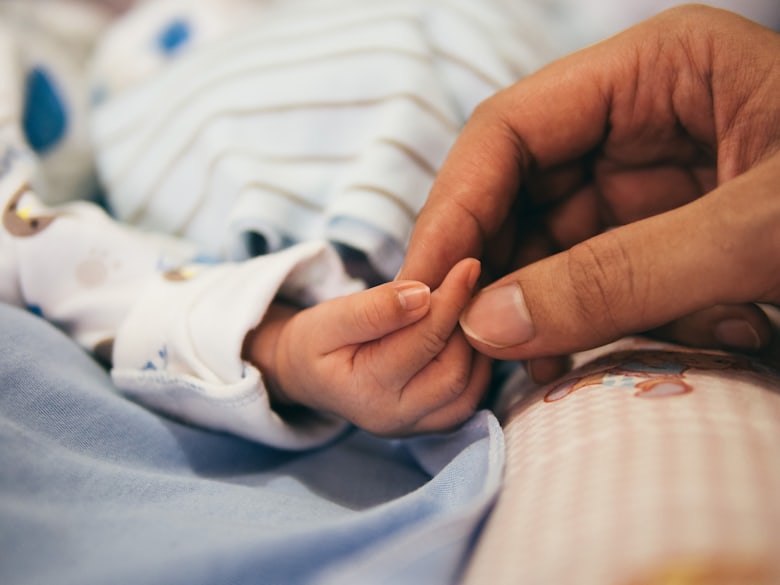 The healthiest relationships are those where two whole people choose each other continuously — not two halves looking for completion. Photo: Unsplash The Honest Closing — What Love Actually RequiresEvery relationship I have ever observed — in clinical practice, in coaching, and in the full human range of lives I have had the privilege to witness — has taught me the same lesson in different ways. Love is not the hard part. Love comes relatively easily. What is hard is the willingness to do the sustained, unglamorous work that love requires to survive contact with real life. That work includes knowing your own values and communicating them honestly. It includes understanding your needs and having the courage to name them. It includes learning your attachment patterns and taking responsibility for what they cause in the people you love. It includes repairing quickly, communicating accountably, and maintaining your own identity alongside your commitment to another person. This is also why the question of infidelity — as painful as it is — deserves honest examination rather than simple moral condemnation. People do not cheat because they are bad. They cheat because they are human — with needs that were not met, wounds that were not healed, and choices that were not made wisely. Understanding this does not excuse the betrayal. But it does make the path to prevention — or to healing — considerably clearer. “The greatest relationship you will ever have is the one with yourself. Every other relationship is a reflection of that one — its clarity, its honesty, its depth, and its courage.” — The Marcopera | Happysimus.com If this post has stirred something — a recognition, a question, a conversation you have been avoiding — that is the point. The most important relationships in your life deserve the most honest thinking you can bring to them. Start that thinking today. Explore more on personal growth, health, and living well at Happysimus.com. 📖 More from Happysimus on Personal Growth & Health: → The Purpose Audit — Is Your Life Pointing the Right Way? → The Sleep Revolution — Why Sleep Is Your Most Powerful Health Tool → Why Money Cannot Buy Happiness — And Why Everyone Still Wants It About The Marcopera — Physician, OB-GYN specialist, certified Mindstream Life Coach, and founder of | ❤️ Relationship Stats 2026 20-25% of married US adults have cheated at least once 76% consider secret emotional affairs to be infidelity Women 3× more likely to cheat when sexually incompatible Compatibility now confirmed as distinct mate preference — 2026 research 📖 Related on Happysimus 🔗 Research Sources Frontiers in Psychology — Compatibility Study 2026 PsyPost — Science of Infidelity Attachment Style Compatibility Forbes — 3 Relationship Patterns 2026 📚 Books by The Marcopera Destined for Greatness Weekly Planner for Men 50 Golden Rules for Life Diary & Daily Mood Tracker Blood Pressure Log Book Gratitude Journal for Men My Daily Journal |


