
Happysimus › Blog › AI & Health › AI Wearables
Health & Wellness · AI & Medicine · Wearable Technology
A Physician’s Honest Answer — What the Science Says About AI, Wearables, and Early Disease Detection
By The Marcopera | Physician · OB-GYN · AI Educator · Founder, Happysimus
July 2, 2026 · Health & AI · 11 min read

The device on your wrist may know you are getting sick before your body tells you. Photo: Unsplash
A patient — a 42-year-old teacher — mentioned in passing that her smartwatch had flagged an elevated resting heart rate and disrupted HRV for three nights running. She felt completely fine. She almost dismissed it. Forty-eight hours later she had a 39°C fever and a confirmed respiratory infection. Her watch knew before she did. That story is no longer remarkable. It is becoming routine. The question — can AI really tell you are sick before you feel symptoms? — is one I now hear regularly. From patients wearing Oura Rings and Apple Watches. From colleagues curious about the clinical implications. From people who are genuinely excited about what their data might be telling them — and slightly unsure whether to trust it. As a physician and AI educator, my honest answer is this: yes — partially, in specific contexts, with important limitations you need to understand. The science is real. The potential is extraordinary. But the hype has outrun the evidence in some areas, and knowing the difference could genuinely matter for your health decisions. This post gives you the full, unfiltered picture. 📊 THE STATE OF AI WEARABLES — 2026
Sources: Grand View Research via OneDayAdvisor · UCSF / Years.co · JAMIA 2025 Review How AI Wearables Actually Detect Illness — The PhysiologyTo understand what your smartwatch is actually doing when it flags a potential health concern, it helps to understand the physiological signals it is reading. The human body begins responding to illness — infection, inflammation, stress — well before the conscious experience of symptoms begins. The immune response triggers changes that are measurable, if you have the right sensors tracking continuously. The key signals that current AI wearables monitor include: 🩺 WHAT YOUR WEARABLE IS ACTUALLY MEASURING Heart Rate Variability (HRV) The variation in time between heartbeats. High HRV generally indicates good recovery and a well-regulated nervous system. A sudden drop in HRV — before you feel anything — is one of the earliest detectable signals that your body is mounting an immune response. AI analyses your personal HRV baseline and flags deviations that would be invisible to the naked eye. Resting Heart Rate (RHR) Your heart beats faster when fighting infection — even before fever develops. An elevated resting heart rate overnight is a reliable early signal that something is happening internally. AI models your personal baseline and distinguishes illness-related elevation from exercise or stress. Skin Temperature Devices like the Oura Ring 4 measure skin temperature continuously throughout the night. Even a 0.2–0.5°C elevation above your personal baseline — well below the threshold for a clinical fever — can signal early immune activation. This is one of the most sensitive early illness markers currently available in consumer wearables. Respiratory Rate Breathing rate increases slightly during early infection as the body works harder to oxygenate tissues under immunological stress. Many modern wearables track respiratory rate during sleep — a window when the body’s illness response is most detectable without the noise of conscious activity. Blood Oxygen (SpO2) Oxygen saturation drops measurably in respiratory illness, sleep apnea, and certain cardiac events. While consumer SpO2 accuracy is improving, it is still not equivalent to clinical pulse oximetry — a limitation worth understanding before making health decisions based on this metric alone. Sleep Architecture Illness disrupts sleep staging in characteristic ways — more light sleep, less REM, more frequent micro-awakenings. AI models trained on millions of sleep profiles can identify these illness-related disruption patterns and distinguish them from stress or lifestyle-driven poor sleep. What the Research Actually Shows — The Verified EvidenceLet me be precise here — because this is an area where the science is genuinely exciting but also genuinely uneven. I will only cite what has been peer-reviewed or independently verified. ✅ COVID-19 Early Detection — Oura Ring (UCSF, 2022) A study from the University of California, San Francisco (Mason et al., Scientific Reports 2022) showed that the Oura Ring detected changes in body temperature, heart rate, and respiratory rate signalling COVID-19 infection with 82% sensitivity up to 2.75 days before symptoms began. This is one of the most cited and most clinically significant findings in consumer wearable research. ✅ Atrial Fibrillation Detection — Apple Watch The Apple Heart Study — a landmark collaboration with Stanford — demonstrated that the Apple Watch could accurately identify irregular heart rhythms consistent with atrial fibrillation. A 2025 systematic review of 142 studies found consumer wearables achieved a pooled sensitivity of 0.89 for detecting new-onset AFib — clinically significant, since AFib is a leading cause of stroke and is frequently asymptomatic until serious damage has occurred. ✅ Inflammatory Bowel Disease Flare Prediction Research published in Crohn’s & Colitis 360 (Hirten et al., 2021) found that wearable data could predict IBD flare-ups with 72% accuracy up to seven weeks in advance based on sleep and activity patterns alone. For patients living with chronic inflammatory conditions, this level of predictive insight could fundamentally change how disease is managed. ✅ Women’s Health — Fertility and Hormonal Tracking As an OB-GYN, this application is particularly close to my clinical interest. Continuous tracking of skin temperature, HRV, and cycle patterns by devices like the Oura Ring now allows women to identify fertility windows, detect early perimenopause signals, and flag hormonal disruptions — often weeks before they would have presented clinically. This is one of the most transformative applications of wearable AI for women’s health in 2026. 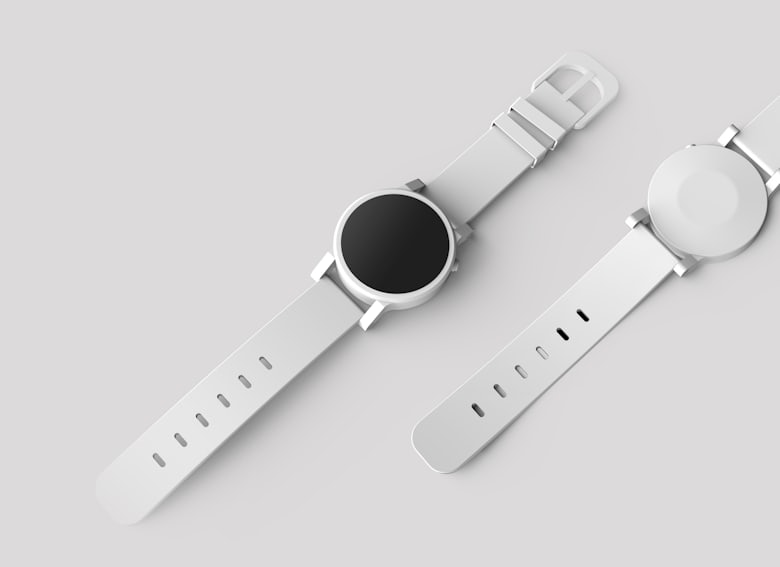 The wearable on your wrist is quietly monitoring hundreds of data points while you sleep. Photo: Unsplash The Honest Limitations — What Your Wearable Cannot DoAs exciting as the evidence is, a physician who did not give you the limitations would be doing you a disservice. These are the things I tell every patient who asks about their wearable data: ⚠️ WHAT YOUR WEARABLE CANNOT DO — YET ① It cannot diagnose — it can only flag A wearable alert is a signal, not a diagnosis. Elevated HRV and resting heart rate could indicate infection, stress, overtraining, dehydration, or simply a bad night’s sleep. As reviewed in AI Magicx’s 2026 wearable guide, even the best consumer wearables generate false positives. The signal is valuable — but it requires clinical interpretation. ② Accuracy varies significantly by skin tone A 2025 systematic review of 142 studies found that while wearables achieved 0.89 sensitivity for AFib detection overall, this dropped to 0.54 in populations with darker skin phototypes — due to the way melanin absorbs the green light used in photoplethysmography (PPG) sensors. This is not a minor technical footnote. It is a clinically significant bias that disproportionately affects African and South Asian populations. Any wearable recommendation must acknowledge this limitation honestly. ③ Blood glucose — not yet reliably available without a sensor Despite years of speculation and multiple claims, no major smartwatch in 2026 can measure blood glucose non-invasively with clinical accuracy. Continuous glucose monitoring still requires a small sensor. The technology is advancing — but the claims have repeatedly outrun the reality. ④ Privacy — your health data is more sensitive than you think As DualMedia’s 2026 analysis highlights, the data your wearable collects can infer pregnancy, mental health status, substance use patterns, and medical conditions. The terms of service on most wellness apps in 2026 still default to collecting everything. Read the privacy policy of any wearable you use. This is not optional hygiene — it is essential.  A wearable alert is a starting point — not a substitute for clinical assessment. Photo: Unsplash A Special Note for Women — The Most Underutilised ApplicationAs an OB-GYN, I want to highlight what I believe is the most underappreciated application of AI wearables in 2026 — women’s reproductive and hormonal health monitoring. Devices tracking skin temperature continuously can now identify ovulation windows with increasing accuracy — providing insight into fertility that previously required expensive clinical testing or less reliable manual methods. The same continuous temperature tracking detects the subtle shifts characteristic of early perimenopause — often years before women receive a clinical diagnosis. Sleep architecture changes, HRV patterns, and cycle irregularities flagged by AI can prompt earlier conversations with a clinician about hormonal health — at a stage when intervention is most effective. For a fuller understanding of women’s intimate health and what your body may be telling you beyond the wearable data — read our post on GLP-1 drugs and women’s health, and explore our physician’s guide to sleep — one of the most powerful levers in women’s hormonal wellbeing. What Makes It AI — Not Just Data CollectionA common misconception is that wearables are simply sophisticated pedometers — collecting data passively and displaying it. What makes the 2026 generation of devices genuinely different is the AI layer that sits on top of the raw sensor data. The AI does three things that raw data collection cannot: ① It personalises your baseline Population averages are largely useless for individual health monitoring. AI learns your personal normal — your resting heart rate, your typical HRV range, your usual sleep architecture — and flags deviations from your normal, not a population average. This personalisation is what makes early detection possible. ② It identifies multi-signal patterns A single elevated heart rate measurement means little. But when AI sees elevated resting heart rate, reduced HRV, elevated skin temperature, and disrupted sleep architecture — simultaneously, over consecutive nights — the combination becomes a highly specific signal that something physiological is happening. This multi-signal pattern recognition is beyond human cognitive capacity at scale. ③ It learns and improves over time Unlike a one-off blood test or clinical measurement, continuous wearable AI builds a longitudinal model of your health — learning seasonal patterns, stress responses, exercise recovery curves, and illness signatures specific to you. The longer you wear the device, the more personalised and accurate its insights become. The Physician’s Practical Guide — How to Use Wearable Data WiselyIf you are already using a wearable — or considering one — here is how to get genuine health value from it without falling into the traps I see regularly in clinical practice: 1. Track your baseline for at least 2-4 weeks before drawing conclusions The AI needs your personal data to set your baseline. In the first few weeks, do not over-interpret individual readings. Let the device learn what your normal looks like first. 2. Look for multi-night patterns — not single readings One bad night of HRV data is not an illness signal. Three consecutive nights of elevated RHR, reduced HRV, elevated temperature, and disrupted sleep together — that is worth paying attention to. 3. Bring your data to your doctor — not instead of them Wearable data is most valuable when it is taken to a clinical encounter. Screenshot the trend. Show your physician. Several major health systems now accept Apple Watch ECG and Oura Ring sleep data as part of clinical assessments. Use this integration proactively. 4. Do not let wearable data replace sleep — it should improve it One of the most common wearable side effects I observe is sleep anxiety — people so focused on their sleep score that the act of monitoring worsens the very thing they are trying to improve. As we explored in our comprehensive post on the sleep revolution — sleep quality itself is the goal. The data is just the mirror. 5. Check the privacy settings on day one Your wearable health data can infer medical conditions, mental health status, and reproductive health. Read the privacy policy. Opt out of data sharing with third parties where the option exists. Treat your health data with the same seriousness you would a medical record — because in many respects, it is one. Also read our post on AI literacy and privacy for a deeper understanding of how platforms handle your data. The Physician’s Verdict — Yes, With Important CaveatsSo — can AI really tell you are sick before you feel symptoms? The honest answer, having reviewed the evidence as both a physician and an AI educator, is: yes, in specific and well-documented contexts, with important limitations that must be understood. The Oura Ring detecting COVID-19 up to 2.75 days before symptoms with 82% sensitivity is not hype — it is peer-reviewed science. AFib detection with 0.89 pooled sensitivity across 142 studies is clinically meaningful. IBD flare prediction seven weeks in advance could change lives. These are real, verified, reproducible findings. What AI wearables cannot do is diagnose, replace clinical assessment, or overcome their own accuracy limitations in populations with darker skin tones. And what they must not do — for any of us — is become a source of health anxiety that replaces the very thing they are designed to support: actually looking after ourselves. The future of preventive medicine will be built on the convergence of wearable AI, clinical expertise, and an informed, engaged patient — someone who understands their data, knows its limits, and uses it to have better conversations with their doctor. That is not the future. In 2026, for millions of people, that is already now. Learn more about how AI is transforming healthcare more broadly in our post on AI in African healthcare. “The best doctor you will ever have may be the one on your wrist — not because it replaces clinical medicine, but because it never sleeps, never misses a reading, and knows your body better than any single appointment can.” — The Marcopera | Happysimus.com 📖 Continue Reading on Happysimus: → The Sleep Revolution — Why Sleep Is Your Most Powerful Health Tool → GLP-1 Drugs — What Nobody Is Telling You (Physician’s Unfiltered View) → How AI Is Transforming Healthcare Across Africa and the Developing World → Think You Know AI? These 10 Questions Surprise Most People About The Marcopera — Physician, OB-GYN Specialist, ECFMG certified, certified life coach, AI educator, and founder of | ⌚ Wearables 2026 $92.9B wearable market in 2025 500M+ active devices globally 82% COVID detection sensitivity — Oura Ring 2.75 days before symptoms — UCSF study 📖 Related on Happysimus 📚 Books by The Marcopera Blood Pressure Log Book 50 Golden Rules for Life Weekly Planner for Men Diary & Daily Mood Tracker Dream Journal Cash In on the AI Wave AI is transforming health AND income. Learn how to profit from it in 2026. |


