
Personal Growth · Health & Wellness · AI & Income
By The Marcopera | Physician · Certified Life Coach · Founder, Happysimus
June 26, 2026 · Personal Growth · 10 min read
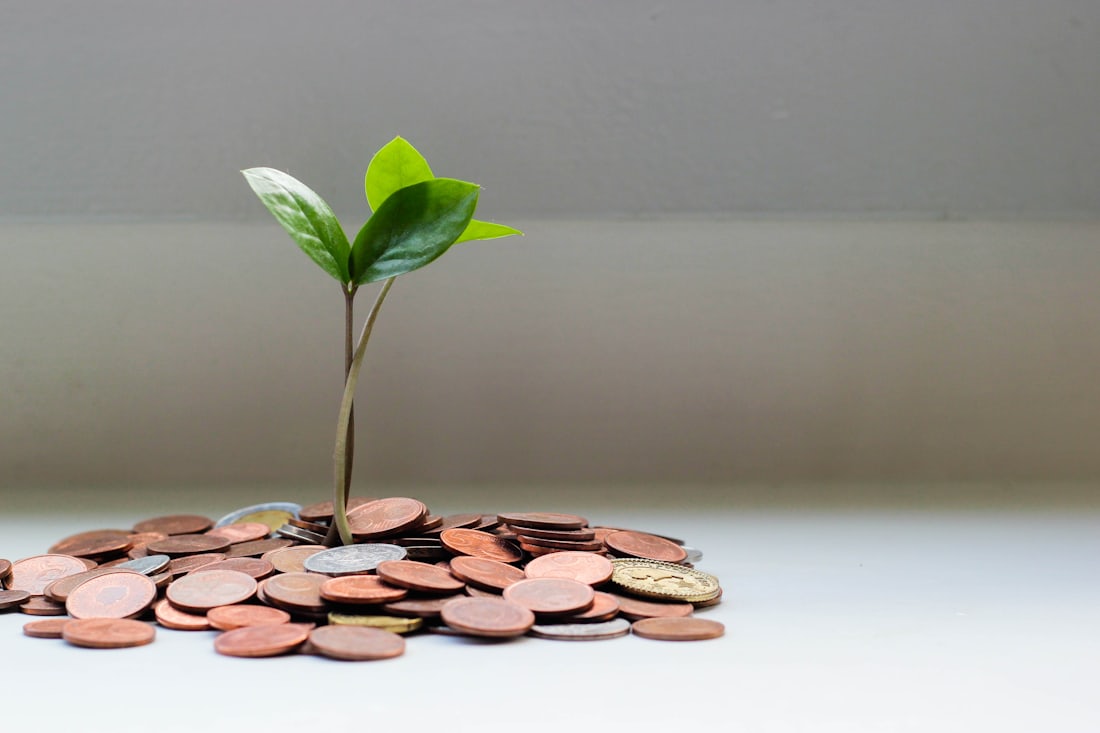
Everyone wants it. Almost nobody admits it makes them happy. So what is actually going on? Photo: Unsplash
“Money cannot buy happiness.” It is one of the most repeated phrases in the history of human wisdom. It appears in philosophy, religion, literature, and motivational posters everywhere. And yet — look around. Everyone is working harder, longer, and more desperately than ever to get more of the very thing they claim cannot make them happy. What exactly is going on here? I have sat across from patients at both ends of the wealth spectrum — in clinic rooms in Europe, in resource-limited settings across Africa, in the quiet offices of people whose net worth most of us will never approach. And I can tell you, with the authority of a physician who has also spent years as a certified life coach: the relationship between money and happiness is one of the most misunderstood, most poorly framed, and most consequential questions in human psychology. The popular saying is not exactly wrong. But it is not exactly right either. And the gap between those two positions is where most people spend their entire lives — running toward something they have been told will not satisfy them, while never pausing to ask the more useful question: what kind of happiness are we actually talking about? What the Science Actually Says — And It Is More Interesting Than You ThinkFor decades, the most cited study on this question was a 2010 paper by Nobel Prize winners Daniel Kahneman and Angus Deaton from Princeton. Their conclusion — summarised endlessly in headlines and TED talks — was that happiness rises with income, but only up to around $75,000 per year. After that, the line flatlines. More money, same happiness. The Happiness Plateau, as it became known. It felt like scientific confirmation of what the philosophers had been saying for centuries. Then in 2021, University of Pennsylvania researcher Matthew Killingsworth published a competing study — and the happiness plateau crumbled. Using real-time data collected through a smartphone app tracking 33,000 people, Killingsworth found that happiness kept rising with income well beyond $75,000, with no sign of flattening. The debate between these two findings was genuine, significant, and unresolved. What happened next was extraordinary. Kahneman and Killingsworth — in an unusual act of scientific integrity — conducted an adversarial collaboration, working together with a third-party mediator to reconcile their findings. Their 2022 joint conclusion was nuanced, head-twisting, and far more honest than either original study alone: 🔬 WHAT THE RESEARCH ACTUALLY CONCLUDED For already-happy people: Happiness continues rising with income — with no clear ceiling. More money genuinely produces more wellbeing, indefinitely. For unhappy people: Money helps — significantly — up to a point. But above a certain income threshold, more money does nothing more for their happiness. The plateau is real, but only for those who were already struggling. The astonishing conclusion: Money can buy happiness if you are already happy. But if you are miserable to start with, money will only do so much. The internal state you bring to wealth matters more than the wealth itself. Read that again. The research says money is more effective at buying happiness for people who are already happy. Which means that the people most desperately chasing money in the hope it will fix how they feel — the ones working 80-hour weeks, sacrificing relationships, neglecting their health — are precisely the people for whom money is least likely to deliver what they are actually looking for. The United States Problem — The Wealthiest, Yet Among the Most UnhappyIf money bought happiness reliably, the United States would be the happiest nation on Earth. It is not. It recently dropped out of the global top 20 for happiness — despite having the fastest-growing economy, outperforming 98% of other high-income countries in economic output, and 88% in productivity. “We’re so wealthy, but so unhappy,” as one historian put it bluntly to the New York Times. This is not an American anomaly. It is a human pattern. As societies grow wealthier, the baseline of what counts as “enough” rises in parallel. A generation ago, a home, a car, a stable job, and a family holiday each year constituted a successful life. Today those same things feel like the minimum — and the anxiety about whether you have enough has not decreased proportionally with the increase in what you actually have. Psychologists call this the hedonic treadmill — the tendency for humans to rapidly return to a relatively stable level of happiness despite major positive or negative life changes. Win the lottery: extraordinary joy, then back to baseline within months. Lose a job: significant distress, then adaptation and recovery. The treadmill keeps moving. The destination never changes. And chasing money as the primary happiness strategy keeps you running without ever arriving. So Why Does Everyone Still Want It? The Honest AnswerHere is where I want to stop and be completely honest — because the dismissal of money as a source of happiness can tip into a kind of comfortable hypocrisy that serves no one. Everyone wants money for very good reasons. Poverty is not romantic. Financial insecurity is one of the most corrosive forces in human wellbeing — it destroys sleep, erodes relationships, produces chronic stress that manifests as physical illness, and removes the freedom to make choices about your own life. Research on cash transfers in low and middle-income countries found that giving people money makes them happier — and keeps them happier for a long time. When you do not have enough, more money is transformative. 💡 WHAT MONEY ACTUALLY BUYS — AND WHAT IT DOES NOT
The Harvard Study of Adult Development — 87 years of longitudinal research, one of the longest-running studies of human health and happiness in history — found something quietly devastating: the quality of your relationships is the single strongest predictor of happiness and health in later life. Not your income. Not your career achievements. Not your net worth. The depth and warmth of your human connections. People who were most satisfied in their relationships at age 50 were the healthiest at age 80. Money featured in the study — financial security matters — but it was consistently outperformed as a happiness predictor by connection, meaning, and purpose.  87 years of research says the same thing: relationships, not riches, are the strongest predictor of happiness. Photo: Unsplash The HOW Matters More Than the HOW MUCHHere is a finding from behavioural economics that I find genuinely fascinating — and that changes the way I think about both money and happiness. Researchers at the University of Cambridge analysed nearly 77,000 actual bank transactions from 625 participants and found something remarkable: people who spent money on purchases that matched their personality were significantly happier — and this effect was more powerful than the effect of their total income or total spending. It was not how much they spent. It was the alignment between how they spent and who they actually were. An introvert who spent on books and solitude reported more happiness than an introvert who spent on parties and socialising — even if the introvert’s total income was lower. The money itself was almost irrelevant. The self-knowledge guiding its use was everything. This is what I mean when I say the question itself is wrong. The question should not be “can money buy happiness?” The question should be: “Am I spending my money in a way that reflects my actual values — or in a way that reflects my fears, my ego, and what I think will impress other people?” Most people, if they are honest, do a significant amount of the latter. We buy the car that signals status rather than the car that serves us. We holiday where photographs look impressive rather than where we genuinely rest. We accumulate the things that say “I have arrived” rather than the experiences that make us feel alive. And then we wonder why the arrival never feels as good as the anticipation. The Physician’s Perspective — What I Have Seen on Both EndsHaving practised medicine across different economic and cultural contexts — in well-resourced settings in Europe and in environments where the healthcare system itself was the scarcest resource — I have had a particular vantage point on this question. I have treated patients of extraordinary financial means who were genuinely, profoundly unhappy. Not because they lacked gratitude or perspective — but because they had spent decades building something that did not align with what they actually valued, and had no idea how to begin dismantling it. The wealth was real. The trap was also real. And I have encountered people of very modest means who radiated a contentment so genuine and unperformed that it stopped you mid-sentence. Not because poverty is noble — it absolutely is not — but because they had, through necessity or wisdom or both, built their happiness on foundations that money cannot erode: community, purpose, daily meaning, the knowledge that their life was their own. Both observations point to the same conclusion. Money is a powerful tool. Like all powerful tools, its effect depends entirely on the hands that wield it and the purpose for which it is used. In the right hands, serving the right purpose, it is genuinely life-enhancing. In the wrong hands, serving the wrong purpose — covering inadequacy, performing status, numbing dissatisfaction — it changes nothing that matters. The AI & Income Angle — Building Wealth With Purpose in 2026One reason this topic sits at the heart of the Happysimus mission is that in 2026, more people than ever have access to tools that can genuinely change their financial situation — AI-powered income streams, digital products, content platforms, and knowledge businesses that were simply not available to previous generations. This is genuinely exciting. Financial freedom — the ability to cover your needs, remove the chronic stress of scarcity, and have choices about how you spend your time — is a meaningful and worthwhile goal. The research is clear: below the sufficiency threshold, more money directly and significantly improves wellbeing. Pursuing financial security is not shallow. It is rational, it is responsible, and in many cases it is urgent. But the same research is equally clear about what comes after sufficiency. Once your needs are met and your security is established, the next increments of wealth produce diminishing returns — unless they are channelled into experiences, relationships, generosity, and purpose. The question for anyone building income in 2026 is not just how to build it — but why, and what for. AI & INCOME Building financial freedom with purpose — not just profit. Discover the 3 real AI income tiers working in 2026 and how to build wealth that actually serves your life. Five Things That Buy More Happiness Than Money Ever CouldBased on the research, my clinical experience, and what I have observed across cultures and economic contexts, here are the five investments that consistently outperform money as happiness generators — and that money, used wisely, can sometimes help you access: ① Deep, quality relationships 87 years of Harvard research cannot be argued with. Invest in your people — not as a networking strategy, but as a human necessity. The loneliness epidemic is real, and no income bracket is immune from it. ② A sense of meaning and purpose People with a strong sense of purpose report higher happiness, better health, and greater resilience to adversity — regardless of income level. Knowing why you get up in the morning is worth more than knowing how much you earn. ③ Experiences over possessions Research consistently shows that spending on experiences — travel, meals, concerts, adventures — produces more lasting happiness than spending on things. Experiences become stories. Possessions become clutter. ④ Autonomy — control over your own time The single most happiness-producing thing money can buy is time — specifically, the freedom to choose how you spend it. Buying back your hours through financial security, smart systems, or paying for services that free your time, is one of the highest-return investments you can make. ⑤ Giving — generosity as a happiness strategy Counterintuitively, one of the most reliable ways to increase your own happiness with money is to give it away. Research on prosocial spending — giving to others — consistently shows a stronger happiness boost than spending the same amount on yourself. The act of giving reconnects you to something larger than your own accumulation. The Real Answer — And What to Do With ItSo why do people say money cannot buy happiness, yet everyone wants it? Because both parts of that sentence are true — just about different things. Money absolutely can buy the removal of suffering — of stress, of scarcity, of the exhausting daily grind of not having enough. That is real, and it matters enormously. If you do not have enough, getting more will make you significantly happier. Pursue it with full commitment and zero apology. But money cannot buy the presence of flourishing — of deep connection, of meaning, of the quiet satisfaction of a life lived in alignment with your values. Those things are constructed differently, through choices that have nothing to do with your account balance. And no amount of accumulation substitutes for them. Everyone chases money because they are — underneath the spreadsheets and the hustle — chasing the freedom, the security, the options, the experiences, and the sense of worth that money can sometimes provide. The tragedy is when the chase continues long after those things have been secured, because nobody paused to notice that the original need had already been met — and that the remaining hunger was for something money was never going to satisfy. “Money is a magnificent servant and a terrible master. The question is never whether you have enough of it — the question is whether it is working for your life, or whether your life is working for it.” — The Marcopera Build your income with intention. Spend it in alignment with your values. Give some of it away. And remember — consistently, daily — that the most happiness-generating things in a human life are available to you right now, regardless of your bank balance. The relationships you choose to invest in. The purpose you decide to live by. The person you are becoming. Those are yours. Money cannot take them from you. And it cannot give them to you either. About The Marcopera — Physician, OB-GYN Specialist, certified Mindstream Life Coach, world traveller, and founder of | 📚 Books by The Marcopera Breaking the Silence Around Sex Weekly Planner for Men Sudoku: 555+ Puzzles Blood Pressure Log Book Diary & Daily Mood Tracker Dream Journal Gratitude Journal for Men |


