
Happysimus › Blog › AI & Income · Africa · Solar Energy
AI & Income · Africa · Solar Energy · Innovation
600 Million People Without Electricity. 60% of the World’s Best Solar Resources. The Fastest Solar Growth on Earth. And a Company Called Taku Energy That Understands Exactly What Needs to Happen Next.
By The Marcopera | Physician · AI Educator · Founder, Happysimus
July 23, 2026 · AI & Income · Africa · 14 min read
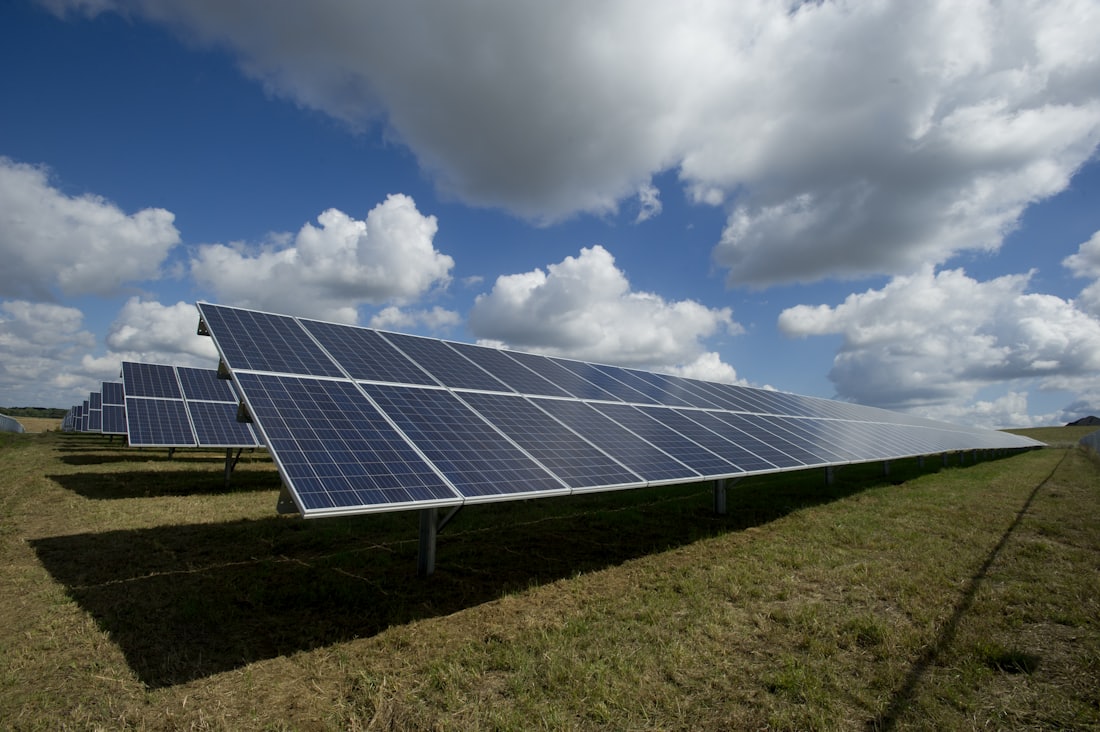
Africa holds 60% of the world’s best solar resources. In 2025, the continent finally began claiming them — at record speed. Photo: Unsplash
I want to begin this story with an old friend. His name is Taku A. aka Le Prezi — a fraternity brother from our college days, and the founder and CEO of Taku Energy Smart Solutions. When I look at what Le Prezi has built — a company at the precise intersection of renewable energy engineering and intelligent technology, with a mission explicitly pointed toward Africa’s clean energy future — and when I look at the data coming out of Africa’s solar sector in 2025 and 2026, I cannot help but feel that Le Prezi saw something important long before most people were paying attention. This post is about what he saw. And why he was right. There is a number that should stop every policymaker, every investor, and every technology entrepreneur in their tracks. Six hundred million. That is how many people in Africa still have no access to electricity in 2026. Not unreliable electricity. Not expensive electricity. No electricity at all. And yet this same continent holds 60% of the world’s best solar resources — the highest solar irradiance on Earth — and is currently experiencing the fastest solar growth of any region in the world. The gap between what Africa has and what Africa uses is the defining energy story of our era. And that gap is finally, decisively beginning to close. Companies like Taku Energy Smart Solutions are part of why. ☀️ AFRICA SOLAR 2026 — THE NUMBERS THAT MATTER
Sources: IEA 2025 · Global Solar Council Feb 2026 · Forbes Africa Feb 2026 · Corporate Knights Apr 2026 The Paradox at the Heart of Africa’s Energy StoryAfrica holds 60% of the world’s best solar resources, yet solar PV currently accounts for only 3% of the continent’s electricity generation. This single statistic captures the central paradox of African energy: extraordinary natural abundance alongside extraordinary underutilisation. The reasons are structural and well-documented — insufficient infrastructure investment, financing barriers, political instability in some regions, policy inconsistency, and the legacy of centralised grid systems that were never built to reach rural and peri-urban populations. Africa has 20% of the world’s population but receives just 3% of global energy investment. Over the past decade roughly half of energy investment in Africa has been in oil and gas, primarily for export. Spending on clean energy remained relatively flat at less than $30 billion per year until 2021 — since then, growth has intensified, driven by low-emissions power. But the structural picture is changing faster than most external commentators have recognised. Growth is now driven by two parallel solar transitions: utility-scale projects funded by public and development finance, and rapidly expanding privately financed rooftop and distributed systems. This second transition is particularly significant. Ordinary households and businesses are not waiting for governments to solve the problem. They are solving it themselves — one rooftop, one mini-grid, one battery storage system at a time. Where the Growth Is Actually Happening — Country by CountryAt least 23 African countries, including Tunisia, Kenya, Chad and the Central African Republic, now generate more than 5% of their electricity from solar energy. Battery costs in Africa have fallen to $112/kWh in 2025, down from $144 in 2023, making solar-plus-storage systems increasingly viable for homes and businesses who were previously priced out. Over the past four years, about 44% of new solar capacity has been distributed — driven by households, businesses, farms and mini-grids responding to high power prices and unreliable grids. ☀️ NIGERIA — WHAT TRANSFORMATION LOOKS LIKE ON THE GROUND Nigeria’s Electrification Programme has deployed mini-grids, rooftop solar, and other solar solutions to people without electricity access. Since 2018, the private-sector-driven programme has helped at least 5.9 million Nigerians access electricity services, in part through the commissioning of 180 mini-grids. Nigeria added 803 MW of solar capacity in 2025 alone — second only to South Africa on the continent. And a June 2026 deployment in Nigeria showed that AI-driven load management tied to solar and battery storage could reduce manufacturing power costs by 70% — demonstrating that AI-enabled solar is already delivering measurable results on the ground. Taku Energy Smart Solutions — From IBM and GE to Africa’s Solar FutureThis is where my friend Alain Taku re-enters the story. And it is quite a story. Mr. Taku channelled over two decades of groundbreaking expertise from IBM and GE into founding Taku Energy Smart Solutions, with a clear vision: to bridge the United States and Africa through the dual power of renewable energy and intelligent technology. The IBM and GE pedigree matters here — it means that Taku Energy approaches solar not merely as panel installation, but as a full systems engineering challenge involving smart IT infrastructure, IoT-enabled monitoring, predictive maintenance, and energy optimisation algorithms. Alain’s perspective on Africa’s energy challenges carries particular weight because he has engaged directly with the policy environment on the ground. When Cameroon introduced sweeping tax incentives for solar energy projects — a 10-year elimination of several taxes on renewable energy equipment — Alain Taku was among the expert voices quoted in analysis of the reforms, warning with characteristic directness that Cameroon’s solar ambitions could be undermined by one critical bottleneck: the shortage of trained engineers capable of maintaining a rapidly scaling infrastructure of solar installations. That observation is not a criticism of Cameroon’s solar ambitions. It is the insight of someone who understands that hardware without human expertise is infrastructure waiting to fail. And it points to exactly what makes Taku Energy’s model distinctive: their strength lies in dual expertise — integrating IT innovation with renewable energy engineering. The people who can design, install, monitor, maintain, and optimise a solar system using AI-driven tools are precisely the people Africa needs most as it scales its solar infrastructure at speed. 💻 TAKU ENERGY SMART SOLUTIONS Founded by Alain Taku · Sandy, Utah, USA · takuenergy.com Renewable Energy System design, off-grid & hybrid solar installations, solar borehole pumps Smart IT Infrastructure Network design, system integration, IoT-enabled monitoring, troubleshooting Energy Optimisation Predictive maintenance algorithms, terrain-specific solutions, real-time insights Diaspora Bridge Connecting African diaspora communities in the US with clean energy solutions for African markets 🏆 Recognition ✅ Amazon 2024 Innovative Small Business Recipient ✅ Comcast 2025 RISE Recipient for outstanding contributions to renewable energy 🌎 African Footprint & Focus Cameroon: Actively engaged in the solar policy debate — Alain Taku cited in expert analysis of Cameroon’s renewable energy incentives, with specific focus on capacity-building for solar maintenance. Cameroon’s government aims to grow renewable energy from 6% to 25% of electricity supply by 2035, with solar central to that target. Nigeria: Active in Africa’s second-largest solar market, supporting the private-sector solar surge that added 803 MW of new capacity in 2025. Broader African emerging economies: Serving clients across the continent through a mission explicitly stated as becoming Africa’s leading supplier of high-quality renewable energy solutions, with skill development and local empowerment central to that vision. The diaspora dimension of Taku Energy’s model deserves particular attention. Africa’s solar transition will not be led exclusively by multilateral development institutions and Chinese panel manufacturers — though both play significant roles. It will increasingly be shaped by people who understand both the technology and the context: engineers, entrepreneurs, and professionals from the African diaspora who carry intimate knowledge of local conditions, community needs, infrastructure realities, and cultural dynamics that purely external actors cannot replicate. Mr. Taku’s career — IBM, GE, then a company explicitly oriented toward Africa’s clean energy future — is a model of that kind of impact. The expertise was built in the global market. The mission is pointed back toward the continent. How AI Is Transforming Africa’s Solar Sector — Six MechanismsArtificial intelligence presents transformative opportunities for addressing longstanding energy sector challenges across Africa. Predictive analytics, smart grids, and demand forecasting technologies can enhance energy access, efficiency, and sustainability. This is not speculative. It is already happening. Here is how. ❶ AI-Powered Energy Demand Forecasting AI’s predictive analysis capability enhances energy forecasting by analysing weather patterns and historical data to predict solar energy production accurately, allowing for better grid management and scheduling of backup power sources. For African mini-grids and off-grid systems that must operate without the backstop of a large national grid, accurate forecasting is the difference between communities having reliable power and communities in the dark. AI and machine learning have already produced up to 30% improvements in solar forecasting accuracy for Independent System Operators globally — and that capability is increasingly available to Africa’s decentralised systems. ❷ AI-Driven Load Management — A 70% Cost Reduction in Nigeria A June 2026 deployment in Nigeria showed that AI-driven load management tied to solar and battery storage could reduce manufacturing power costs by 70%, strengthening the commercial case for broader adoption. For African commercial and industrial users who have historically relied on diesel generators at enormous cost and carbon impact, AI systems that intelligently manage when to draw from solar, when to draw from storage, and when to draw from the grid slash energy costs while dramatically improving reliability. This is exactly the kind of integration — smart IT layered on top of renewable energy hardware — that defines what companies like Taku Energy do. ❸ Predictive Maintenance — Keeping Systems Running in Remote Areas Predictive maintenance powered by AI can analyse sensor data from renewable energy installations to predict equipment failures before they happen, reducing maintenance costs and minimising downtime. This is particularly critical in Africa where solar installations are often in remote or rural locations with limited access to skilled technicians. An AI system that flags a failing inverter or degrading panel output before the system fails keeps communities powered and dramatically extends the life and ROI of installations. When Alain Taku warned of the need for trained maintenance engineers in Cameroon, this is exactly the gap he was pointing to — and AI-enabled predictive maintenance is part of the answer. ❹ Smart Grid Optimisation Across Distributed Systems Commercial buildings across Africa are expected to drive the highest growth rate in AI-powered energy management software through 2031, at a CAGR of 22.25%. AI algorithms managing energy flows across distributed mini-grids — coordinating multiple solar installations, battery banks, and consumption points simultaneously — are enabling grid-like reliability from off-grid systems that was previously unachievable without massive centralised infrastructure. For a continent where the grid was never built to reach everyone, this distributed-but-smart model is a genuine leapfrog opportunity. ❺ AI-Powered Consumer Targeting — Reaching the Unreached Engie Energy Access in Kenya partnered with Atlas AI to identify and target rural consumers for solar access using predictive data. AI models trained on satellite imagery, mobile payment data, and demographic information can identify communities most likely to adopt solar, optimise distribution routes, and help solar companies prioritise deployment where impact is highest and commercial viability is most sustainable. For a continent where the challenge is as much logistical as technical, this AI-driven market intelligence is invaluable. ❻ AI-Optimised Battery Storage Management AI can optimise energy storage by managing when and how energy is stored and released, improving the efficiency of battery systems. AI algorithms can forecast energy demand and adjust storage operations accordingly, maximising the use of stored renewable energy. With battery costs having fallen to $112/kWh in Africa and continuing to decline, storage is rapidly becoming the key enabler of 24-hour solar power. AI that optimises charge-discharge cycles, predicts demand peaks, and extends battery lifespan turns a solar-plus-storage system from adequate to genuinely reliable. The Honest Challenges — What Still Needs to ChangeA 54% surge in solar installations is genuinely exciting. The data from 2025 and 2026 is historic. But intellectual honesty requires naming what is still broken — and what Mr. Taku himself has pointed to as the central risk in markets like Cameroon. ⚠️ WHAT THE DATA ALSO SAYS 🔴 The investment gap is staggering. Africa has 20% of the world’s population but receives just 3% of global energy investment. Global energy investment reaches $3.4 trillion in 2026. Energy sector investment in data centre infrastructure alone globally exceeded $105 billion in 2025 — surpassing the entirety of Africa’s energy sector investment that year. 🔴 The trained engineer shortage — the issue Mr. Taku flagged directly for Cameroon. A rapidly scaling solar infrastructure without enough skilled technicians to maintain it is infrastructure waiting to deteriorate. Skill development is not a peripheral concern. It is central to whether Africa’s solar surge becomes a durable transformation or an installation boom that fails over time. 🔴 Policy consistency. “The problem is not the opportunity. It’s visibility. If a government announces a plan, companies need to trust that it will remain in place,” said AFSIA CEO John Van Zuylen. Continued expansion depends on consistent policies, reliable supply chains, and sustained investment in manufacturing and distribution. The Opportunity — And What Comes NextWith Africa’s energy demand expected to grow eight-fold by 2050 and the continent holding 60% of the world’s best solar resources, solar paired with battery storage is critical to deliver affordable, reliable power at scale. The Solar AI market globally, valued at $5.96 billion in 2024, is projected to reach $18.43 billion by 2030 at a CAGR of 20.80%. Africa’s share of that market is still small but accelerating — and the companies, engineers, and entrepreneurs who build the technical infrastructure and community trust now will be extraordinarily well-positioned as that market matures. This is precisely why I find what Mr. Taku is building so compelling. The combination Taku Energy brings — IBM-level systems engineering, GE-scale industrial expertise, renewable energy hardware knowledge, and smart IT integration — is not a niche combination. It is the combination Africa’s solar transition most urgently needs. Installing panels is the beginning of the story. Making those systems smart, connected, monitored, maintained, and optimised over time — through IoT monitoring, predictive algorithms, and AI-driven management — is the story that determines whether communities stay powered for years, not just months. And doing that from a position of cultural connection to the continent adds a dimension of context and trust that purely external actors cannot replicate. As we explored in our post on how Africa can benefit from the AI revolution, the continent has a genuine opportunity to leapfrog legacy infrastructure constraints and build AI-native, solar-powered systems from the ground up. Africa has the sun. It is rapidly building the systems to use it. What it needs now is the intelligent infrastructure on top of that solar base — and the people with the expertise and the commitment to build it right. “Africa has spent decades being told its energy problem is too big, too expensive, and too complex to solve quickly. The data from 2025 and 2026 tells a different story entirely. The continent with the world’s best solar resources is now building the world’s fastest-growing solar market — household by household, mini-grid by mini-grid, one intelligent system at a time. What remains is not the technology. It is the investment, the policy consistency, and — most critically — the human expertise to make those systems last. That is the gap that entrepreneurs like Alain Taku are building their lives around closing.” — The Marcopera | Happysimus.com 📚 Related Reading on Happysimus: → How Africa Can Benefit From the AI Revolution → AI Is Taking Jobs — But Also Creating Ones Nobody Had Heard of Three Years Ago → Can AI Help You Live to 100? Why Longevity Is the New Wellness About The Marcopera — Physician, OB-GYN Specialist, ECFMG certified, AI educator, certified life coach, and founder of Happysimus.com. Writing at the intersection of medicine, AI, and human flourishing. Proud to know people like Mr. Taku Le Prezi who are turning expertise into impact. The continent has the sun. The people who know how to use it are building their companies right now. | ☀️ Africa Solar 2026 Without electricity: 600 million Solar resource share globally: 60% 2025 solar growth YoY: +54% New capacity installed 2025: 4.5 GW Solar share of Africa’s power mix: 3% Demand growth by 2050: 8× 💻 Taku Energy Founded by Alain Taku · Sandy, Utah, USA Renewable energy system design Off-grid & hybrid solar installations Smart IT infrastructure integration IoT-enabled monitoring & maintenance African diaspora · US & African markets 🏆 Amazon 2024 Innovative Small Business · Comcast 2025 RISE Recipient 🤖 AI in Solar ❶ Energy demand forecasting ❷ Load management & cost reduction ❸ Predictive maintenance ❹ Smart grid optimisation ❺ Consumer targeting for access ❻ Battery storage optimisation 📚 Related Reading 📚 Books Destined for Greatness Make & Keep Your Goals 50 Golden Rules for Life |

