Happysimus › Blog › AI & Income · Wellness Economy
AI & Income · Wellness Economy · Opportunity
A Physician and AI Educator Explains the Biggest Economic Opportunity of 2026 — and the Exact Steps to Profit From It
By The Marcopera | Physician · AI Educator · Certified Life Coach · Founder, Happysimus
July 16, 2026 · AI & Income · 13 min read

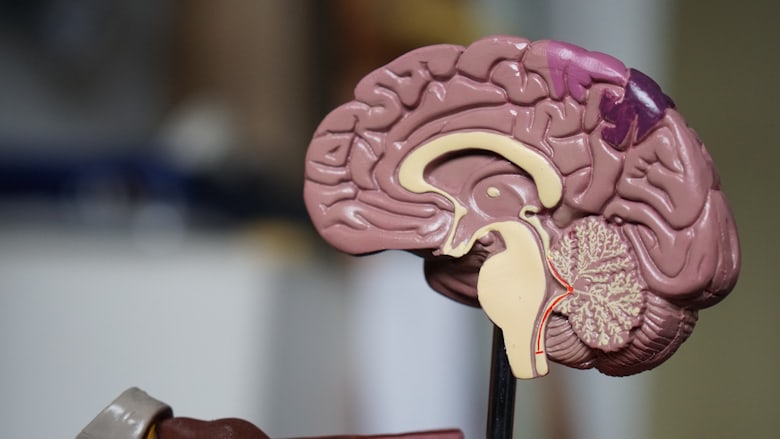
The wellness economy is now bigger than tourism, IT, and sports combined. And AI just made it accessible to everyone. Photo: Unsplash
💡 BEFORE YOU READ ANOTHER WORD — LET THIS LAND The global wellness economy is projected to reach $9.8 trillion by 2029. Here is what that number actually means: 🌠 Bigger than the entire GDP of Germany and France combined — two of the wealthiest nations on Earth, added together. 🌍 Bigger than the combined GDP of every African nation — twice over — all 54 countries, multiplied by two. 🏆 The third largest economy on Earth — if wellness were a country, only the US and China would be bigger. 🏭 More than the entire US federal budget — spent every single year, globally, on health, fitness, nutrition, and wellbeing. 💰 Enough to give every person on Earth $1,200 — every year. Now that the number has landed — let me tell you why it matters for your income. Because buried inside that $9.8 trillion projection is a structural shift that most people have not yet recognised: AI is not just transforming how we manage our health. It is transforming who gets to build a business from it, who gets to serve that market, and who gets to capture a share of the most explosive consumer spending category on the planet. And AI dramatically lowers the barriers for ordinary people to participate in serving that market — regardless of whether you have a medical degree, a business school background, or a Silicon Valley address. The Global Wellness Institute’s landmark November 2025 report — the most authoritative research on the wellness economy published annually — confirmed that the global wellness market reached a record $6.8 trillion in 2024, growing 7.9% in a single year. The GWI projects the industry will expand at 7.6% annually through 2029, reaching an estimated $9.8 trillion — a growth rate substantially higher than global GDP growth of 4.5%. This is not a sector that is slowing down. It is a sector that is accelerating. And AI is increasingly becoming one of the key technologies accelerating the growth of the wellness economy — by enabling personalisation, digital health services, and scalable content creation at unprecedented speed. As a physician who has spent a career at the intersection of medicine, lifestyle, and human behaviour — and as an AI educator who has watched artificial intelligence reshape every industry it touches — I want to give you the complete picture. What is driving this economy. How AI is powering it. Where the specific income opportunities live for ordinary people. And what you can do to position yourself today, before the next wave of this market consolidates around those who moved early. 📊 THE WELLNESS ECONOMY — VERIFIED NUMBERS FROM THE GLOBAL WELLNESS INSTITUTE Source: Global Wellness Institute — Global Wellness Economy Monitor 2025 (released November 2025) What Is Driving the Wellness Economy — And Why It Will Not Slow DownThe GWI attributes this momentum to powerful long-term structural shifts that are not going away: an ageing global population, rising rates of chronic disease and mental ill-health, a consumer pivot toward prevention and longevity, and a generational shift in which younger consumers treat wellness not as a luxury but as a non-negotiable baseline of life. These are not trends. They are demographic and epidemiological realities that will compound for decades. 📈 THE 11 WELLNESS SECTORS — ALL GROWING, SIX HEADING FOR $1 TRILLION EACH Personal Care & Beauty → $1 trillion+ by 2029 Healthy Eating & Nutrition → $1 trillion+ by 2029 Physical Activity → $1 trillion+ by 2029 Wellness Tourism → $1 trillion+ by 2029 Mental Wellness +12.4%/yr 🔥 Wellness Real Estate +19.5%/yr 🔥 Personalized Medicine $147B → +9.3%/yr Traditional & Complementary Medicine +10.8%/yr projected How AI Is Powering the Wellness Economy — The Six MechanismsNIQ’s Global State of Health & Wellness report identifies a major inflection point: health and wellness is now embedded across every area of life rather than being confined to a single category. AI is the infrastructure making that embedding possible. Here is precisely how. 1. Personalisation at Scale — From Generic Advice to Individual Precision As the 2026 wellness trend analysis by Dr Axe confirms, wellness is becoming hyper-personal and data-driven — think biomarker-based nutrition plans and AI wellness platforms that can adjust recommendations based on your sleep data, glucose readings, and stress markers — a capability already available on many leading platforms. NIQ’s research shows that wearables have evolved from passive step-counters into always-on AI-enabled health companions capable of continuous multi-sensor monitoring against personal targets. What once required a team of specialists — nutritionist, sleep coach, personal trainer, therapist — can now be distilled into tailored daily insights through AI platforms. This personalisation is the engine of the wellness economy’s acceleration — because it converts casual health interest into committed, recurring consumer spending. We explored this dimension in our post on AI health wearables. 2. AI Drug Discovery and Personalised Medicine — The $147 Billion Opportunity Prenuvo’s 2026 health trends report confirms that generative AI is playing an active role in accelerating drug development — specifically through target identification, molecule design, and clinical research optimisation — working alongside scientists on new treatment therapies. The GWI identifies the personalised medicine segment at $147 billion with projected 9.3% annual growth through 2029 — driven by longevity-seeking consumers rushing to diagnostic services and AI-powered health optimisation. As we explored in our post on whether AI can help you live to 100, this convergence of AI and longevity medicine is one of the most consequential developments in modern healthcare. 3. AI Content and Education — Democratising Wellness Knowledge The wellness economy runs on information — and AI is dramatically reducing the cost of producing high-quality, personalised wellness content at scale. AI-assisted blog posts, video scripts, meal plans, workout programmes, mental wellness guides, and supplement explainers can now be produced at a fraction of the cost and time they previously required. This is not a threat to wellness professionals. It is a multiplier for them. A nutritionist using AI can serve ten times more clients. A wellness coach using AI can create ten times more content. A physician-educator using AI can reach an audience of millions instead of hundreds. The democratisation of wellness content creation is one of the most accessible income opportunities in the $9.8 trillion economy — and it is available to anyone with domain knowledge and a willingness to learn the tools. Our AI literacy post is the starting point. 4. AI and Mental Wellness — The Fastest-Growing Segment Mental wellness grew 12.4% annually from 2019 to 2024 — the second fastest growing wellness segment globally. The US mental wellness market alone stands at $125 billion. AI-powered mental wellness tools — therapy apps, mood tracking, stress regulation platforms, mindfulness coaches, and cognitive behavioural therapy chatbots — are at the forefront of this growth. It is important to note that these tools may improve access and support for everyday mental wellbeing, but they are not substitutes for licensed mental health professionals when serious illness is present. Cannabis products grew 26%, meditation and mindfulness 18.9%, and sleep solutions 12.6% within this segment. As we explored in our posts on the sleep revolution and the gut-brain axis, the science underpinning mental wellness is accelerating — and AI is making it commercially deployable at scale. 5. AI and Women’s Wellness — A Market Finally Getting Its Own Tools One of the most underreported dimensions of the wellness economy’s growth is the emergence of women-specific AI wellness tools — cycle tracking with clinical precision, perimenopause management platforms, pelvic floor rehabilitation, hormone-aware nutrition coaching, and AI fertility support. As we explored in our post on how medical research has historically underrepresented women in many areas, women’s health has been underserved by the medical establishment for decades. The wellness economy — powered by AI — is filling that gap. FemTech is one of the fastest-growing investment categories in health tech globally. And it represents one of the most significant income opportunities for practitioners, educators, and entrepreneurs with relevant expertise. 6. AI and the Emerging Markets Opportunity — Africa, India, the Middle East The GWI’s 145-country rankings identify Saudi Arabia (12.2% annual growth), India (11.3%), and Mexico (9.8%) as the fastest-growing large wellness markets globally. The Middle East-North Africa region grew at 7.2% annually — among the fastest in the world. As we covered in our post on how Africa can benefit from the AI revolution, the convergence of AI accessibility and rapidly growing wellness spending across emerging markets represents one of the most significant untapped commercial opportunities of this decade. AI is turning wellness from a luxury for the few into a personalised experience for the many. That shift is worth $9.8 trillion. Photo: Unsplash How Ordinary People Can Get Their Piece — Seven Practical PathwaysHere is where I want to be most direct. The wellness economy is not reserved for pharmaceutical companies, luxury spa chains, or Silicon Valley health tech startups. The structure of this market — fragmented, personal, trust-based, and increasingly AI-powered — means that individuals with genuine knowledge, credibility, and the right tools can build meaningful income streams from it. Here is what that looks like in practice. ❶ AI-Powered Wellness Content Creation Wellness is the most content-hungry industry on Earth. Consumers search for nutrition advice, workout plans, mental health guidance, supplement information, and sleep optimisation tips millions of times per day. AI tools allow you to research, draft, edit, and publish high-quality wellness content at a pace and volume that was previously impossible without a full editorial team. A wellness blogger, coach, or practitioner using AI can 10x their content output while maintaining quality. Monetisation routes: advertising, affiliate partnerships, digital products, paid subscriptions, and brand collaborations. This is one of the ten income pathways we cover in our AI income guide. ❷ AI-Assisted Wellness Coaching and Consulting Certified life coaches, nutritionists, fitness trainers, and wellness practitioners are using AI to deliver personalised programmes at scale. AI tools can generate tailored meal plans, personalised workout progressions, habit-tracking systems, and client communication at a fraction of the time previously required. A solo wellness coach can now serve significantly more clients with the same operational overhead — because AI handles the production, personalisation, and administration that previously consumed most of their working hours. The human relationship, empathy, and accountability remain irreplaceable. AI handles the production. The practitioner handles the connection. ❸ Digital Wellness Products — Build Once, Sell Forever E-books, digital courses, guided meditation programmes, nutrition plans, workout libraries, and wellness journals are among the most consistent revenue generators in the digital economy — and AI dramatically reduces the cost and time of creating them. A physician, nurse, therapist, or trained wellness practitioner can use AI to create a professional-grade digital product in days rather than months. Once built, a digital product generates passive income indefinitely. The Happysimus book catalogue — from the Blood Pressure Log to the 10 Pillars of Life to the Gratitude Journal — is built on exactly this model. ❹ AI-Powered Local Wellness Business Implementation Every gym, yoga studio, physiotherapy clinic, nutritionist practice, and wellness spa in your city needs help integrating AI into their operations — and most of them do not know where to start. As we covered in our AI jobs post, the Human-AI Collaboration Specialist is one of the fastest-emerging roles in 2026. Helping local wellness businesses implement AI scheduling, client communication, content creation, and data analysis is a practical consulting service that requires AI fluency and wellness domain knowledge — not a computer science degree. ❺ Affiliate and Partnership Income in the Wellness Space Industry analysis confirms that wellness brands are directing an increasing share of their marketing budgets into digital channels — primarily through paid social, search, and affiliate programmes. The wellness affiliate space is one of the most generous in digital marketing: supplement companies, fitness equipment brands, mental wellness apps, nutrition programmes, and sleep technology companies all operate affiliate programmes with many affiliate programmes offering commissions ranging from around 10% to 40%, though rates vary widely by sector and platform. An AI-powered wellness content creator with an engaged audience can generate substantial passive income through carefully selected affiliate partnerships in sectors they genuinely use and believe in. ❻ Emerging Markets Wellness — The Untapped Frontier According to GWI’s 145-country data, North America leads in per capita wellness spending at $6,029 annually, while other global regions trail significantly — indicating enormous room for market expansion. Africa, Southeast Asia, and the Middle East represent the next frontier of wellness economy growth. AI is reducing the cost of reaching and serving these markets in local languages and local contexts. As we argued in our post on Africa and the AI revolution, the combination of rapidly growing middle classes, increasing smartphone penetration, and AI-powered localisation creates an extraordinary window for wellness entrepreneurs building for these markets now. ❼ Physician and Healthcare Professional Wellness Platforms The American College of Healthcare Sciences’ April 2026 report identifies a growing demand for professionals trained in integrative health, mental wellness, and preventive care — driven directly by the wellness economy’s expansion. Physicians, nurses, pharmacists, and allied health professionals who build AI-powered wellness platforms — combining their clinical credibility with AI’s reach and personalisation capabilities — occupy the most trusted and most commercially valuable position in the wellness market. The credibility of a medical professional cannot be replicated by an algorithm. But AI can extend that credibility across a global audience at a fraction of the traditional cost. The wellness economy rewards credibility, consistency, and the ability to reach people where they are. AI provides all three capabilities to anyone willing to learn. Photo: Unsplash The Honest Caveats — What the Wellness Economy Also Demands⚠️ WHAT TO UNDERSTAND BEFORE YOU BUILD IN THIS SPACE 🔴 Credibility is non-negotiable. The wellness economy rewards genuine expertise and punishes pretence. AI can help you produce content at scale — but the authority behind that content must be earned. Build from what you genuinely know. 🔴 The accuracy standard is high. Health misinformation has real consequences. As we have established as a non-negotiable standard across all Happysimus content — claims must be sourced, animal studies must be flagged, associations must be distinguished from causation. This is not optional in the wellness space. It is your professional and ethical obligation. 🔴 Regulation is tightening. Health and wellness claims are subject to increasing regulatory scrutiny globally — particularly claims relating to supplements, medical devices, and therapeutic outcomes. Know what you can and cannot claim in your jurisdiction. 🔴 Trust is built over time. The wellness economy is a long-term play. The practitioners, platforms, and brands that dominate it in 2030 will be the ones building audience trust consistently from 2026 onward — not the ones chasing trends or shortcuts. “The wellness economy is not a trend. It is a structural shift in how human beings relate to their own health. $9.8 trillion is the number. But the real story is 8 billion people who want to live better — and are increasingly willing to pay for it. AI dramatically lowers the barriers for ordinary people to participate in serving that market for the first time at scale.” — The Marcopera | Happysimus.com 📚 Related Reading on Happysimus: → How to Make Money With AI in 2026 — The 3 Real Income Tiers → AI Is Taking Jobs — But Also Creating Ones Nobody Had Heard of Three Years Ago → Can AI Help You Live to 100? Why Longevity Is the New Wellness ⓘ Medical Note: AI tools can support education, planning, and healthy habit formation — but they should complement, not replace, professional medical advice, diagnosis, or treatment. Always consult a qualified healthcare professional for personal medical decisions. About The Marcopera — Physician, OB-GYN Specialist, ECFMG certified, AI educator, certified life coach, and founder of Happysimus.com. Helping people thrive at the intersection of medicine, AI, and personal growth. The wellness economy is the opportunity. AI is the tool. Your knowledge and credibility are the asset. All three are available to you right now. | 📊 Wellness Economy 2026 Current value (2024): $6.8 trillion Projected by 2029: ~$9.8 trillion Annual growth rate: 7.6% Bigger than: Tourism, IT & Sports combined US wellness market: $2.1 trillion Wellness vs pharma: 4× larger 🚀 7 Income Pathways ❶ AI wellness content creation ❷ AI wellness coaching & consulting ❸ Digital wellness products ❹ Local wellness AI implementation ❺ Affiliate & partnership income ❻ Emerging markets wellness ❼ Healthcare professional platforms 📚 Related Reading 📚 Books by The Marcopera Destined for Greatness 50 Golden Rules for Life Diary & Daily Mood Tracker |